Your Cart

The Go-To Supermarket for Affordable LiDAR Sensors!

Email:info@lidarstar.com

lidar obstacle avoidance

The Perceptual Vacuum: Why Long-Range LiDAR Isn’t Enough

Most autonomous robots are built to see far — but the collisions happen close. That fundamental mismatch defines one of the most underappreciated risks in modern robotics, and it’s why 3D blind spot compensation LiDAR is rapidly shifting from optional upgrade to core safety requirement. Long-range LiDAR systems are architecturally optimized for the horizon, not […]
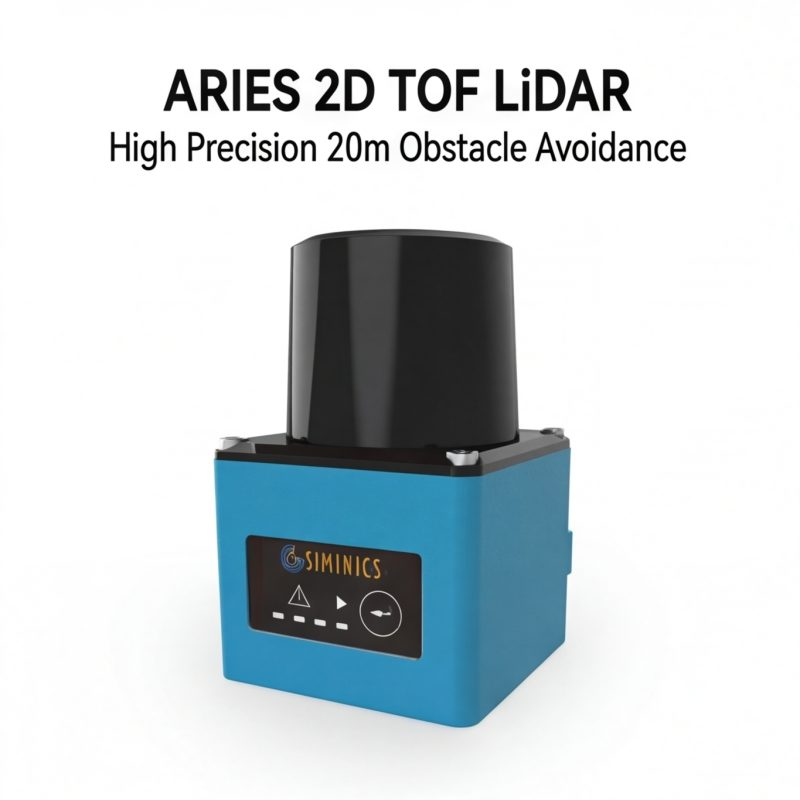

lidar obstacle avoidance

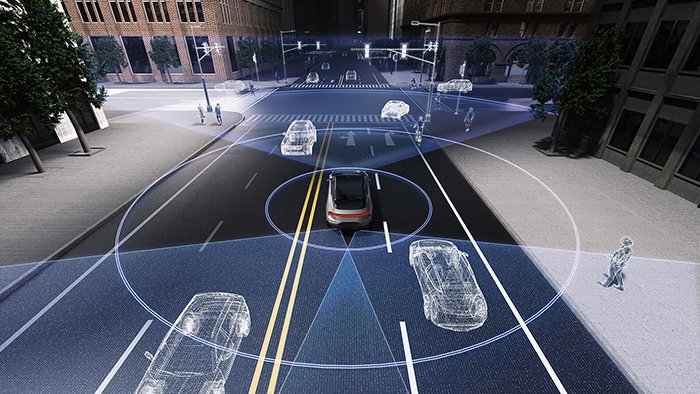
The Shift from Reactive to Predictive Obstacle Avoidance

Autonomous systems relying on reactive detection alone are already obsolete — the industry’s next competitive line is drawn between sensors that detect and systems that predict. LiDAR obstacle avoidance has crossed a threshold: stopping when something appears is no longer good enough.a Traditional sensing technologies carry well-documented constraints. Ultrasonic sensors saturate at close range and […]

lidar for autonomous vehicles

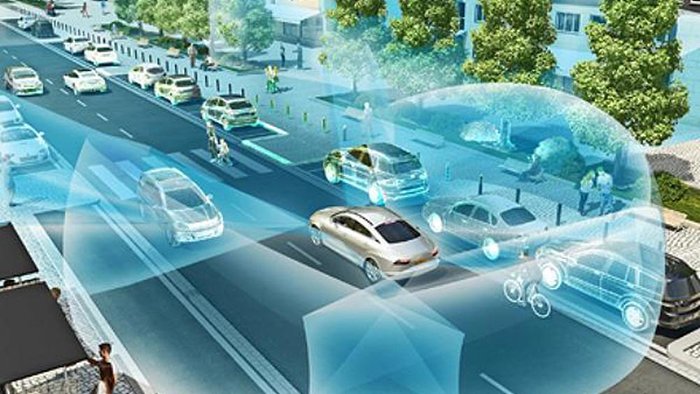
Why 3D Forward LiDAR is Replacing 2D for Autonomous Vehicles

A robot that can’t see a child’s outstretched arm or a shopping cart handle isn’t navigating — it’s gambling. For decades, 2D LiDAR served adequately in controlled, predictable spaces: warehouse aisles, factory floors, mapped corridors. But those environments are vanishing from the R&D roadmap. The real frontier is messy, human-centric, and three-dimensional. “The transition from […]

2d lidar

The Mechanical Advantage: Why 360-Degree Field of View Still Wins

Mechanical spinning LiDAR delivers unmatched spatial awareness because physics — not software workarounds — guarantees complete environmental coverage on every single rotation. The core principle is straightforward. A mechanical lidar scanner works by physically rotating its entire laser-emitter and receiver assembly, sweeping through a full 360-degree horizontal field of view (FOV). This isn’t beam steering […]

2d lidar

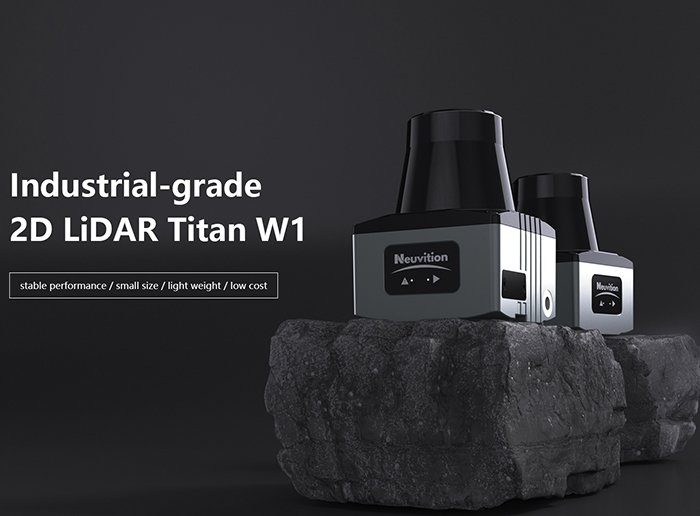
The Engineering Case for 2D LiDAR in Modern Robotics

2D LiDAR is the backbone of industrial AGV navigation — not because engineers haven’t explored alternatives, but because it consistently delivers what warehouse automation actually demands: reliable, real-time spatial mapping at a cost that makes large-scale deployment feasible. According to Grand View Research, 2D LiDAR sensors account for more than 60% of total global LiDAR […]

flash lidar vs scanning lidar

Why Flash LiDAR Is the Future of Autonomous Vehicle Sensors

Mechanical LiDAR’s spinning mirrors and rotating assemblies were always a compromise — a workaround that the industry treated as permanent until something fundamentally better arrived. Flash LiDAR is that something better. Rather than sweeping a laser beam point-by-point across a scene — a process that introduces latency, mechanical wear, and vulnerability to vibration — flash […]

frequency modulated continuous wave LiDAR

FMCW LiDAR vs. ToF: The Future of Level 4 Autonomy Explained

Frequency modulated continuous wave LiDAR doesn’t just improve on pulsed sensing — it changes the fundamental physics of how vehicles perceive the world around them. Traditional pulsed time-of-flight (ToF) systems work on a straightforward principle: fire a laser pulse, measure how long it takes to return, calculate distance. Clean in theory, but limited in practice. […]

3d mechanical lidar

The Evolution of Spatial Perception: From 3D Modeling to Real-Time LiDAR

Autonomous systems don’t see the world — they reconstruct it, and the fidelity of that reconstruction determines whether a vehicle stops in time or doesn’t. 3D refers to any geometric representation defined across three spatial coordinates: X, Y, and Z. As defined by industry leaders, 3D modeling involves creating a geometric representation of an object […]

UAV LiDAR integration

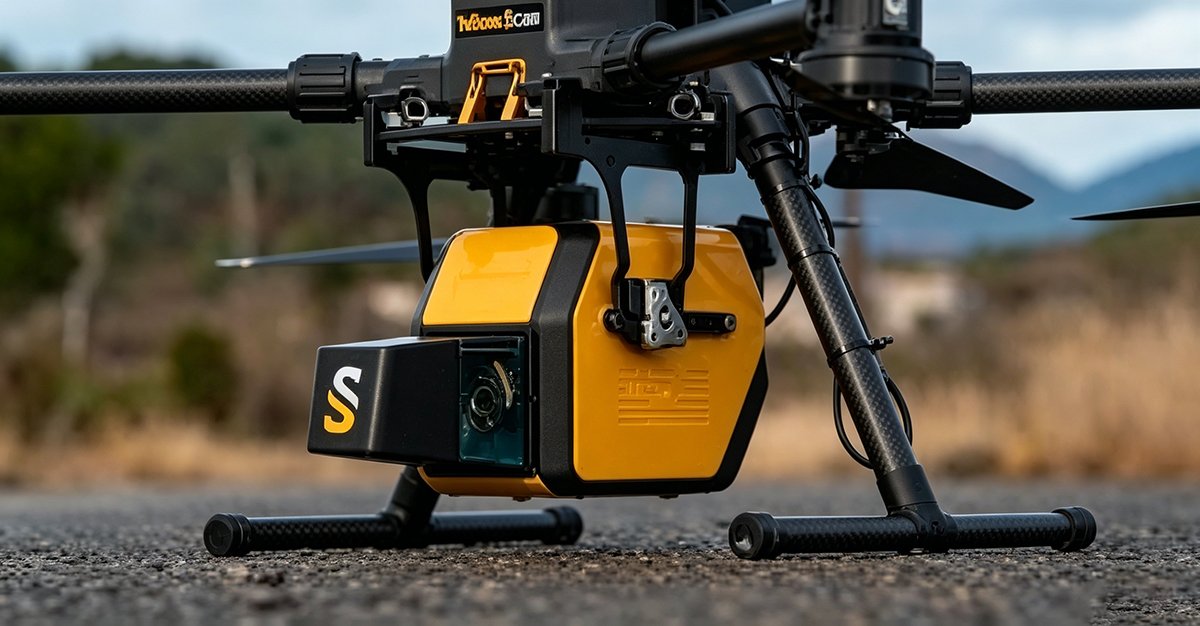
The Precision Gap: Why Cameras Fail Where Drone LiDAR Excels

Cameras lie. Not intentionally — but under a dense forest canopy at dusk, or inside a shadowed industrial corridor, a passive optical sensor simply cannot see what isn’t lit. That fundamental limitation has quietly undermined the reliability of drone-based inspection and mapping for years. The industries demanding centimeter-level accuracy can’t afford blind spots. LiDAR-equipped drones […]

autonomous driving

Level 4 Autonomous Driving: The Future of AI Safety in 2026

Human error causes approximately 94% of serious motor vehicle crashes, according to the National Highway Traffic Safety Administration. That single statistic is the beating heart of the entire autonomous driving industry — and it’s why 2026 is shaping up to be the year the conversation shifts from incremental progress to genuine transformation. The safety case […]

Product Enquiry