
Human error causes approximately 94% of serious motor vehicle crashes, according to the National Highway Traffic Safety Administration. That single statistic is the beating heart of the entire autonomous driving industry — and it’s why 2026 is shaping up to be the year the conversation shifts from incremental progress to genuine transformation.
The safety case for autonomy isn’t aspirational. It’s mathematical — and regulators, automakers, and technology suppliers are finally aligning around the same deadline.
For years, the most visible form of vehicle intelligence on public roads has been adaptive cruise control (ACC) and autonomous emergency braking (AEB). These Level 2 systems keep you centered in a lane or apply the brakes when a sensor detects a hazard. They’re useful. They save lives. But they still require a human driver to remain engaged and responsible at all times — they assist, they don’t replace.
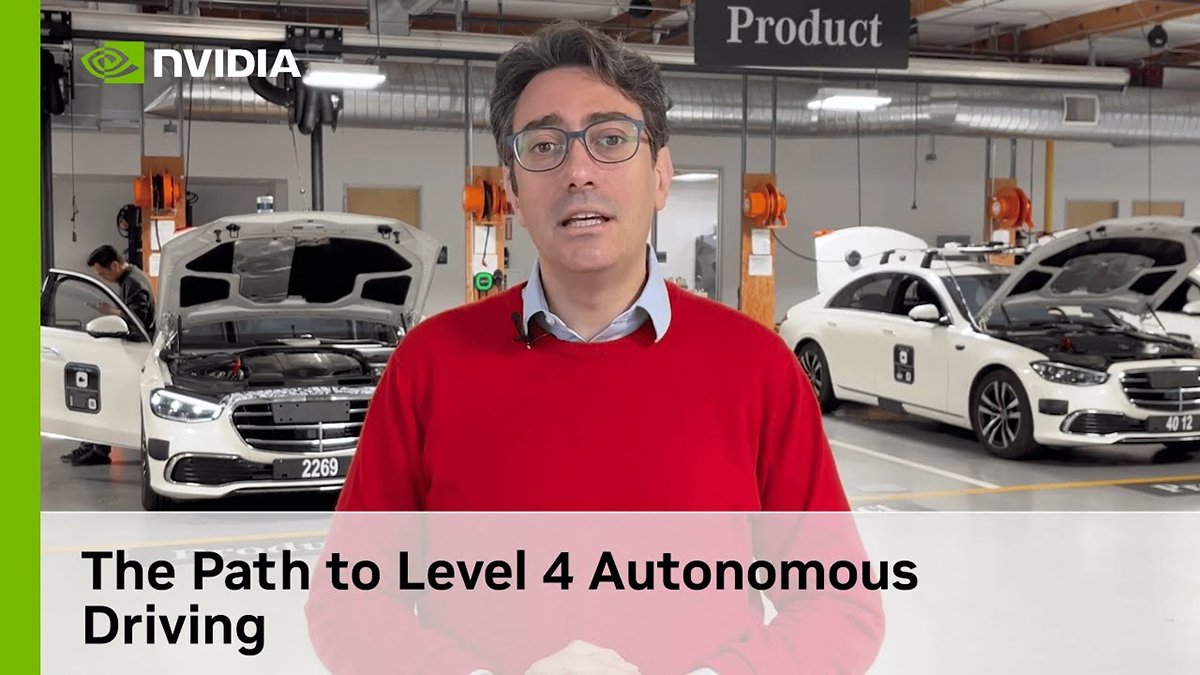
Level 4 autonomy changes that equation entirely. Under SAE’s framework, a Level 4 vehicle can handle all driving tasks within a defined operational domain without human intervention. No hands required. No fallback driver needed. According to the Autonomous Vehicle Market outlook through 2035, the commercial deployment window for Level 4 systems is tightening rapidly, with 2026 representing a genuine regulatory and technical tipping point.
What’s driving the urgency isn’t ambition alone — it’s policy. Regulatory bodies across the US, EU, and Asia are formalizing frameworks that demand demonstrable safety performance, and sensor fusion architectures capable of combining LiDAR, radar, and camera data are central to meeting those standards. Hardware capable of supporting scalable L4 perception has finally matured to match the software ambitions.
The question now isn’t whether Level 4 is coming. It’s whether the AI infrastructure behind it is ready — and that’s where 2026 gets genuinely complicated.
2026’s Biggest AI Trends: Why Software Alone is No Longer Enough
As the previous section established, the shift from assistive to truly autonomous driving isn’t just a software update — it’s a fundamental rethinking of how AI perceives and interprets the physical world. autonomous driving AI has reached an inflection point where raw computational power is outpacing the quality of data feeding it.
Jensen Huang, NVIDIA’s CEO, has been vocal about this bottleneck. At CES 2026, his vision crystallized around a core argument: the next generation of self-driving systems won’t be constrained by the AI models themselves, but by the richness of their sensory inputs. Processing power means nothing if the underlying data is ambiguous, low-resolution, or missing critical spatial depth.
“The physical AI era demands that machines don’t just see the world — they must understand it dimensionally, in real time, with zero tolerance for perceptual gaps.”
This is where the gap between software ambition and hardware reality becomes most visible. Current camera-based systems, while cost-effective, struggle to deliver the high-fidelity spatial data that modern AI architectures are designed to consume. Cameras lose critical detail in low-light conditions, overexposed environments, and complex urban intersections — exactly the scenarios where autonomous decisions carry the highest stakes. As IEEE Xplore notes, “the perception system of an autonomous vehicle must be able to detect and track objects in 3D space with high precision and low latency” — a bar that cameras alone consistently fail to meet.
3D LiDAR technology is emerging as the essential complement, providing the dense point-cloud data that AI models need to build accurate environmental models. Understanding how 2D and 3D sensors compare makes it immediately clear why the industry is accelerating toward multi-channel 3D systems.
Another major trend reshaping the 2026 pipeline is generative AI for simulation. Training autonomous systems on real-world data alone leaves dangerous blind spots — rare but catastrophic edge cases like wrong-way drivers or sudden debris on highways. Generative models can synthetically recreate thousands of these scenarios, dramatically expanding training datasets without requiring a single real-world incident. According to NVIDIA’s autonomy research, simulation-driven training is now central to achieving reliable Level 4 performance at scale.
AI requirements vs. Hardware requirements — the core tension:
- AI needs:: High-density spatial input, millisecond-latency object tracking, reliable performance in adverse conditions
- Hardware must deliver: Multi-channel depth sensing, all-weather resilience, scalable production costs
That tension between what AI demands and what today’s sensor suites actually provide points directly to the hardware question at the heart of 2026’s autonomy race — and specifically, why the industry is converging on one sensor category above all others.
The Hardware Redundancy Mandate: 3D LiDAR as the AI’s ‘Eyes’
As the previous section made clear, the leap to Level 4 autonomy demands more than smarter algorithms — it demands smarter sensing. Software can only work with the data it receives. When that data is incomplete, ambiguous, or delayed, even the most advanced AI model will fail. That’s the core hardware challenge facing self-driving car companies in 2026: building a sensor stack reliable enough to keep a vehicle safe without any human fallback.
Resolution: Why Cameras and Radar Fall Short
Cameras produce rich visual data, but they’re fundamentally vulnerable. Glare, fog, low-light conditions, and lens distortion can all degrade image quality at exactly the wrong moment. Radar, while weather-resistant, lacks the spatial resolution needed to distinguish a pedestrian from a parking meter at close range. Neither sensor alone — nor both together — can reliably construct the dense, three-dimensional picture of the world that urban driving demands.
According to SAE International, solid-state and high-resolution 3D LiDAR sensors are essential for achieving Level 4 and Level 5 autonomy by providing redundant, high-fidelity spatial data. A 128-channel 3D system, for instance, can capture millions of precise point measurements per second, creating real-time environmental maps that cameras simply cannot replicate. You can explore how high-density channel systems perform in demanding perception scenarios to understand why channel count translates directly to object-detection accuracy in cluttered urban environments.
Latency: Speed of Perception Matters
In a busy intersection, decisions happen in milliseconds. Sensor latency — the delay between a physical event and the AI receiving usable data — can mean the difference between a safe stop and a collision. Modern 3D LiDAR systems are engineered to minimize this gap, feeding real-time point clouds to the vehicle’s perception stack with low-latency throughput that camera-processing pipelines often struggle to match at equivalent resolution.
Redundancy: No Single Point of Failure
Redundancy is not optional at Level 4 — it’s the architectural foundation. A mature sensor stack layers LiDAR, cameras, and radar precisely because each technology covers the blind spots of the others. LiDAR anchors this stack as the primary spatial reference. When one sensor degrades, the system continues operating safely — which is the non-negotiable requirement for a driverless deployment.
The debate in 2026’s production cycle has shifted toward solid-state LiDAR over traditional mechanical units. Solid-state designs offer fewer moving parts, lower production costs, and greater durability — factors that matter enormously when scaling to thousands of vehicles. Understanding this technology shift is also reshaping how autonomous fleets approach aerial and ground-level spatial mapping across multiple industries.
This hardware evolution isn’t happening in isolation. The procurement decisions being made right now — at major industry events and supply chain negotiations worldwide — are locking in which sensor configurations will define the next generation of autonomous fleets.
Insights from Auto China 2026: The Global Shift in Sensor Procurement
Auto China 2026 made one thing unmistakably clear: the center of gravity for autonomous vehicle hardware is shifting — and procurement strategies are shifting with it. What emerged from the show floors wasn’t just a showcase of sleek concept vehicles. It was a live demonstration of how the supply chain for critical sensors, particularly LiDAR, is being fundamentally restructured.
Mid-Market LiDAR Leaders Are Rewriting the Rules
One of the standout trends at Auto China 2026 was the rise of competitively priced, high-performance LiDAR units that rival premium alternatives at a fraction of the cost. These mid-market entrants aren’t sacrificing capability — they’re delivering the long-range detection, high point density, and real-time object classification that Level 4 systems demand. Features once reserved for flagship units, like integration with adaptive cruise control systems and full 360-degree environmental mapping, are now available at price points that make fleet-scale deployment genuinely viable.
The commoditization of automotive-grade LiDAR is not a threat to quality — it’s the unlock that makes mass autonomy possible.
For procurement managers, this is significant. The CH128 series and similar high-channel units now position OEMs to outfit entire robotaxi fleets without the budget ceilings that previously slowed scaling.
Cutting Out the Middleman
Perhaps the most consequential shift observed at Auto China 2026 was behavioral: procurement teams are increasingly going direct. Bypassing regional distributors and working factory-to-fleet, manufacturers are compressing lead times and negotiating volume pricing that simply wasn’t accessible through traditional intermediary channels.
This mirrors broader market momentum. According to McKinsey & Company, the global autonomous vehicle market is projected to grow at a CAGR of over 22% through 2030 — a pace that makes procurement agility a genuine competitive differentiator.
Understanding why LiDAR accuracy matters at scale becomes even more critical when sourcing at volume, where small specification gaps compound across thousands of units.
That pressure to scale efficiently isn’t limited to passenger vehicles. As the next section explores, the same hardware innovations driving autonomous cars are now converging with warehouse robotics and humanoid platforms — opening an entirely new procurement frontier.
The Future Market: Scaling Autonomous Fleets and Industrial Robotics
The sensor procurement strategies debated on the Auto China 2026 show floor aren’t just reshaping passenger vehicles — they’re quietly revolutionizing entire industries. As McKinsey & Company data confirms, advancements in sensor fusion and LiDAR technology are the primary drivers behind a 22% CAGR in autonomous systems globally. That growth isn’t confined to highways. It’s happening in warehouses, city streets, and factory floors simultaneously.
Logistics and Warehouse Automation
Automotive-grade LiDAR is rapidly finding a second home inside distribution centers, where the precision demands are just as unforgiving as any public road.
- 360° point cloud mapping for dynamic obstacle detection in high-traffic aisles
- Centimeter-level positioning to navigate narrow racking systems safely
- autonomous emergency braking integration for last-meter pallet and pedestrian collision avoidance
- Real-time load detection to adjust routing under variable weight conditions
In GPS-denied environments like these, reliable indoor navigation technology becomes the foundational layer that keeps autonomous forklifts and mobile robots operating safely at scale.
Urban Mobility and Smart City Fleets
Robotaxi and autonomous shuttle operators face a different challenge: scaling hundreds of vehicles without inflating per-unit sensor costs.
- Long-range LiDAR (200m+) for intersection-level situational awareness
- Multi-return capability to handle rain, fog, and variable urban lighting
- Compact form factors that meet pedestrian safety regulations
- Sensor redundancy stacks compatible with V2X communication protocols
Industrial Robotics and Humanoid Convergence
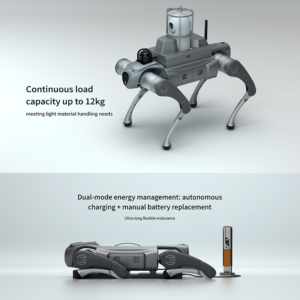
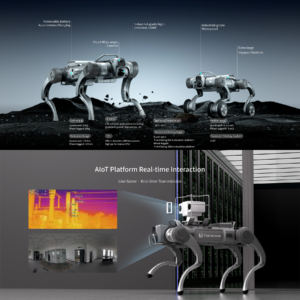
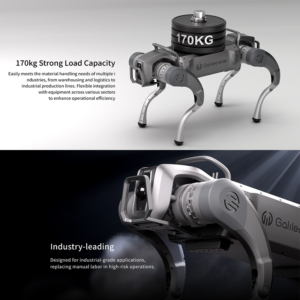
Perhaps the most consequential trend is the convergence of humanoid robotics and self-driving perception stacks. Humanoid platforms increasingly borrow the same LiDAR modules validated for automotive deployment.
- Shared sensor certification pathways reduce qualification timelines
- Modular sensor architectures enable rapid iteration between robot generations
- Factory-grade vibration and temperature tolerance requirements mirror automotive standards
What ties all three sectors together is procurement strategy. A one-stop sensor sourcing model — spanning automotive, robotics, and industrial grades — gives fleet operators and integrators the flexibility to scale without managing dozens of separate supplier relationships. As that complexity grows, so do the questions buyers are asking. The most common ones deserve direct answers.
Frequently Asked Questions About 2026 Autonomous Tech
What is the difference between Level 3 and Level 4 autonomy?
Level 3 allows the vehicle to handle most driving tasks but still requires a human driver to be available for takeover when prompted. Level 4 autonomy eliminates that requirement entirely — the system manages all driving functions within a defined operational domain, no human intervention needed. That distinction is the critical regulatory and engineering threshold the industry is working to cross right now, as detailed in NVIDIA’s breakdown of AI-driven autonomous systems.
Why is LiDAR preferred over camera-only systems for 2026 models?
Camera-only systems struggle in low-light, adverse weather, and high-speed edge cases where precise depth data is non-negotiable. LiDAR delivers direct 3D point-cloud measurements, providing the redundancy and reliability that safety certifications demand. For engineers evaluating perception stacks, exploring purpose-built sensors for autonomous applications clarifies how hardware specs translate directly into real-world performance margins.
How can startups secure factory-direct pricing for certified sensors?
The smartest move startups can make is establishing supplier relationships early — before fleet scaling creates supply chain pressure. In practice, volume commitments, long-term purchase agreements, and direct engagement with manufacturers — bypassing distributor markups — are the most reliable paths to competitive unit pricing. Certified sensors acquired at scale pricing can meaningfully reduce per-vehicle hardware costs as autonomous fleets expand.
Key Takeaways
- AI needs:: High-density spatial input, millisecond-latency object tracking, reliable performance in adverse conditions
- Hardware must deliver: Multi-channel depth sensing, all-weather resilience, scalable production costs
- 360° point cloud mapping for dynamic obstacle detection in high-traffic aisles
- Centimeter-level positioning to navigate narrow racking systems safely
- autonomous emergency braking integration for last-meter pallet and pedestrian collision avoidance