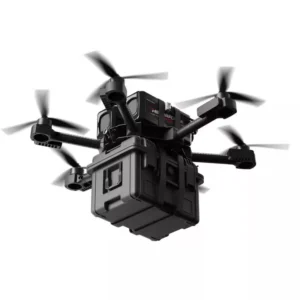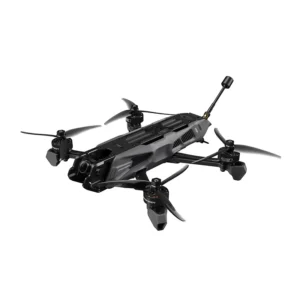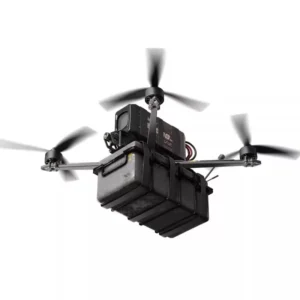
LiDAR sensors for physical AI matter because a machine cannot act well in a space it barely understands. Cameras can show appearance, and software can classify objects, but a robot still needs geometry: where the floor is, how far the pallet edge sits from the path, whether a person is crossing the lane, and how much free space remains around a moving platform. That is the practical role of 3D spatial awareness.
The quick answer is that LiDAR sensors for physical AI should be evaluated as part of a complete perception loop, not as a magic sensor. The sensor measures distance and shape. The compute stack turns points into objects, maps, zones, or trajectories. The machine then makes a navigation, inspection, warning, or work decision. If any part of that loop is weak, the project will feel impressive in a demo and unreliable in daily use.
Start With The Physical Task
Physical AI is a broad phrase, so the engineering question should be narrow. Does the machine need to drive through a warehouse aisle, count objects, avoid equipment, inspect a dock, watch an intersection, or guide a tool near a surface? Each task needs a different field of view, mounting location, update rate, point density, and software output.
For mobile robots, the robotics LiDAR application page is a useful internal starting point because it keeps the discussion tied to route behavior. For fixed machines, the industrial automation LiDAR page is often more relevant because the sensor may watch a zone, a process, or a safety boundary rather than ride on a robot.
Why 3D Geometry Changes The Conversation
A 2D scan can be excellent for planar navigation, but physical AI often needs height, volume, and shape. A carton on the floor, a rack crossbar, a raised fork, a hanging cable, and a person leaning into a lane can look very different in 3D. A point cloud gives the system a richer description of space before classification or planning begins.
The general LiDAR overview explains how distance measurements form a spatial picture, and the point cloud concept page helps non-specialists understand why many 3D measurements become a usable representation of surfaces. In a practical machine, those points are only useful when they are filtered, aligned, and tested against the real route.
The Perception Loop
A practical perception loop has five parts: measure, align, filter, interpret, and act. Measurement comes from the sensor. Alignment connects the sensor frame to the machine frame. Filtering removes data that does not matter. Interpretation turns points into obstacles, lanes, surfaces, or objects. Action changes robot behavior or sends information to another system.
Many projects fail because the team jumps straight from measurement to action. The robot sees points, so the team assumes intelligence will follow. In reality, timestamps, mounting offsets, vibration, floor reflectivity, body occlusion, and compute latency all affect whether the machine can make a trustworthy decision.
| Perception step | Engineering question | Useful evidence |
|---|---|---|
| Measure | Does the sensor see the target object? | Known test objects at marked distances |
| Align | Are frames and timestamps consistent? | Stable points while the machine turns |
| Filter | Is irrelevant space removed carefully? | Before and after cloud comparison |
| Interpret | Does software classify the scene correctly? | Saved examples from difficult cases |
| Act | Does behavior improve on the route? | Repeatable route trials with logs |
Use Open Tools To Keep Decisions Visible
Open tools help teams avoid black-box confusion. The Open3D point cloud documentation shows common operations such as downsampling and point cloud processing. The Nav2 documentation shows how a robot navigation stack organizes sensing, localization, planning, and behavior. These references are useful even when the final system is custom because they make the flow of data easier to discuss.
A useful development habit is to save the raw cloud, the filtered cloud, the software decision, and the behavior that followed. When the robot stops, drifts, or ignores an object, the team can review each layer instead of guessing. That habit shortens field debugging more than another dashboard full of attractive visuals.
Where Physical AI Projects Usually Break
The first weak point is mounting. A sensor that is too low may see the floor and machine body more than the route. A sensor that is too high may miss short obstacles. A sensor placed behind a cover may lose useful angle. Before buying more compute, confirm that the scan actually covers the physical problem.
The second weak point is the assumption that clean data means useful behavior. A point cloud can look clean while still missing a thin object. It can also look noisy while preserving the one edge that matters. Review the data against the work decision, not against a screenshot standard.
Field Testing For Machines That Act
NIST work on mobile robotics systems and standard test methods is valuable because it emphasizes repeatable measurement. A physical AI pilot should borrow that attitude. Define the object, route, distance, lighting, speed, surface, and expected response before declaring success.
For autonomous systems more broadly, NIST describes research around intelligent systems and autonomous vehicles. The lesson for a buyer is simple: a machine that acts in the world needs evidence, not only a polished demonstration. The right sensor choice should survive repeat trials in the environment where it will work.
Selection Notes For Real Projects
When comparing options through the 3D LiDAR sensor category, start with scene geometry. How wide is the workspace? What is the smallest object that changes behavior? Does the system need height? Will the sensor move or remain fixed? What latency can the controller tolerate? These questions are more useful than reading a maximum range number in isolation.
The broader LidarStar solutions page can help frame the project by application. A warehouse robot, roadside unit, drone payload, and inspection machine have different constraints. The best request through the LidarStar request page includes route photos, target objects, mounting limits, computer platform, interface needs, and a short description of the decision the machine must make.
Build A Handoff Package
A good handoff package for LiDAR sensors for physical AI includes sensor position, frame names, wiring, interface settings, saved point clouds, filter parameters, route photos, and known failure cases. It should also include negative tests: the low object that was missed, the surface that caused false returns, or the mounting angle that blocked the route.
This documentation is not paperwork for its own sake. It lets another engineer repeat the setup, understand the limits, and improve the system without starting from memory. Physical AI projects become practical when the evidence trail is strong enough for the next person to trust.
Pilot Evidence To Collect Before Scaling
A useful pilot for LiDAR sensors for physical AI should be written like an engineering record, not a sales note. Record the test location, sensor height, mounting angle, route or scene boundary, object size, lighting, weather or floor condition, software version, and the exact behavior expected from the system. The notes should be factual enough that another engineer can repeat the test without asking what the first team meant.
Start with a clean baseline, then add ordinary difficulty. For a robot, that might mean a low carton, a reflective panel, a dark object, a narrow post, a person crossing from the side, and a temporary obstruction near the normal path. For a roadside or fixed installation, that might mean a slow walker, a fast bicycle, a turning vehicle, glare, partial occlusion, and a maintenance vehicle parked near the sensor. The test should look like daily work, not a staged demonstration.
Every run should capture three layers of evidence. The first layer is raw or minimally processed sensor data. The second layer is the interpreted result, such as an object, track, zone event, depth map, or filtered cloud. The third layer is the actual behavior that followed, such as a stop, warning, route update, measurement, or message. When those layers are saved together, the team can identify whether a problem came from sensing, processing, or decision logic.
Add one control scene that should not trigger the system. This may be an object outside the route, a person standing in a safe area, a vehicle moving away from the conflict zone, or a surface that should be ignored. Control scenes are useful because they reveal whether the system is merely active or actually selective. A reliable deployment needs both positive detection and calm behavior when nothing important is happening.
Also record the ordinary reset procedure. If the sensor is cleaned, rebooted, remounted, or temporarily disconnected, the team should know how to confirm that alignment and output are still correct. Recovery checks are easy to skip during a pilot, but they become important once the system is maintained by people who did not build it.
| Pilot record | What to write down | Why it matters |
|---|---|---|
| Mounting | Height, angle, bracket, window, and cable route | Explains coverage and repeatability |
| Scene | Route, target object, lighting, surface, and occlusion | Connects data to real conditions |
| Data | Raw frame, filtered output, timestamp, and settings | Keeps debugging evidence intact |
| Behavior | Stop, alert, track, map update, or other response | Shows whether sensing changed the outcome |
| Limit | Missed object, false return, latency, or unstable case | Prevents overclaiming readiness |
Common Mistakes That Hide Weakness
For a later-stage project review, compare the article guidance with LiDAR sensor product families, then keep the measurement assumptions close to neutral LiDAR technology overview and NIST laser scanner ranging tests. This keeps LiDAR Sensors for Physical AI: Why Machines Need 3D Spatial Awareness tied to repeatable evidence rather than a single attractive demonstration.
When the application involves robots, vehicles, or moving equipment, review robotics LiDAR applications and OSHA robotics safety overview together. For teams using ROS data, ROS 2 LaserScan message definition and ROS PointCloud2 message definition are useful references for checking whether the output format matches the software contract.
Before the final shortlist, compare the physical environment against industrial automation LiDAR deployments. If timing, frames, or collision behavior matter, save notes beside ROS 2 tf2 transform documentation and Nav2 collision monitor documentation so another engineer can repeat the same check later.
For purchasing or scaling decisions, connect the final requirement back to request a LiDAR application recommendation. Safety, compliance, and training notes can be checked against ISO 3691-4 driverless industrial truck safety standard, while the supporting video reference related LiDAR application video gives the team a quick visual reminder of practical LiDAR behavior.
For outdoor, public, or high-reflectivity scenes, keep NIST laser scanner calibration experiments, NOAA LiDAR measurement overview, and FDA laser product safety information with the project notes. Those references help the next reviewer understand calibration, measurement context, and laser-safety assumptions.
The first mistake is changing too many variables between runs. If the team changes mounting height, filter settings, target position, lighting, and speed at once, the next result is hard to explain. Change one important variable, repeat the same scene, and write down the effect. That slower rhythm usually saves time because the cause of improvement or failure remains visible.
The second mistake is reviewing only successful clips. A successful clip shows potential, but the missed object, false stop, delayed message, noisy depth map, or unstable track teaches the project more. Keep a folder of failure examples and label each one plainly. A later engineer should be able to see what failed, what changed, and whether the change actually solved the problem.
The third mistake is confusing visualization quality with operational readiness. A clean point cloud, neat track line, or attractive depth image is useful only if it supports the decision the machine must make. Ask whether the system saw the object that matters, ignored what should be ignored, responded in time, and recovered naturally. If the answer is unclear, the test is not finished.
Maintenance And Operations Review
A practical sensor installation has to survive routine work. The lens or window must be reachable for cleaning. The bracket must resist vibration and accidental bumps. The cable route must avoid strain, pinch points, and moving parts. The mounting position should not create a new hazard for operators or service staff. These details are not secondary; they decide whether the system stays aligned after the first week.
Operations teams should review the test from their own point of view. Does the robot block an aisle? Does a roadside unit create too many nuisance alerts? Does a fixed sensor require a ladder for cleaning? Does the system behave differently during shift change? Engineers may focus on frames, signals, and filters, while operators notice whether the result fits the work pattern. Both views are required before scaling.
A good review meeting uses the saved evidence rather than memory. Replay one clean run and one difficult run. Show the raw data, interpreted result, and behavior. Ask engineering, operations, maintenance, and purchasing to name one pass condition and one concern. The decision should come from shared evidence, not from the loudest opinion in the room.
How To Compare Candidate Sensors
When comparing candidates for LiDAR sensors for physical AI, avoid starting with a single headline number. Range, field of view, angular detail, frame rate, interface, environmental fit, mounting options, and software support all matter, but their importance depends on the scene. A compact indoor robot, a roadside intersection unit, and an embedded near-field sensor do not need the same balance of specifications.
Build a simple comparison matrix from the job. List the objects the system must detect, the farthest and nearest useful distances, the required update timing, the allowed mounting envelope, the environment, and the data format your software can actually use. Then score each sensor against those conditions. This keeps the discussion practical and prevents a strong specification in one area from hiding a weakness in the real task.
If the project has a hard integration constraint, put it near the top of the matrix. A sensor that fits the optical requirement but cannot connect to the available controller may slow the project. A sensor with useful data but an awkward mount may create maintenance problems. A sensor that works indoors but fails in glare may not fit an outdoor or doorway scene. The best choice is the one that matches the whole deployment, not the one that wins one column.
Before the final decision, run one readiness review with the people who will install, operate, and maintain the system. Ask whether the sensor can be mounted without blocking normal work, cleaned without special effort, replaced without redesign, and monitored with the tools already available. A technically capable sensor that creates daily friction will be hard to scale. A slightly simpler setup that the site can maintain may produce better long-term results. That final review often catches practical problems before hardware is ordered for the pilot site and rollout.
Handoff Notes For The Next Engineer
The handoff package for LiDAR sensors for physical AI should include the final sensor position, mechanical drawings or photos, cable route, host computer, interface settings, frame names, calibration notes, filter parameters, saved examples, and the reason important choices were made. It should also include the known limits, because those limits are often the first thing a future expansion will encounter.
Do not delete negative results after the system improves. If one mounting angle missed low objects, keep the example. If one filter removed useful edges, keep the before-and-after files. If one lighting condition created noise, save the clip. Negative evidence prevents future teams from repeating the same mistake and helps support staff recognize symptoms when the system changes.
A final acceptance note should separate proven behavior from behavior that still needs a longer trial. Short pilots can validate mounting, coverage, timing, and basic response, but they cannot reveal every shift pattern, cleaning routine, seasonal lighting change, surface condition, or maintenance event. Mark what is ready, what is promising, and what should be monitored. That honesty makes the next deployment stronger.
Conclusion
LiDAR sensors for physical AI give machines the 3D spatial awareness needed to work around people, equipment, lanes, shelves, vehicles, and changing scenes. The strongest projects start with the physical task, validate the perception loop, use repeatable field tests, and choose sensors from route evidence rather than broad claims. That approach turns spatial data into dependable machine behavior.
FAQ
What does physical AI mean in a LiDAR project?
It means a machine uses sensor data to understand and act in a physical environment, such as moving, inspecting, avoiding, measuring, or monitoring.
Is 3D LiDAR always required for physical AI?
No. Some planar navigation tasks work well with 2D sensing, but 3D LiDAR becomes important when height, volume, shape, or complex scenes affect the decision.
What should be tested first?
Test whether the sensor sees the real target objects from the planned mounting position before tuning advanced software.
How does point cloud filtering affect reliability?
Filtering can reduce compute load and noise, but aggressive settings can remove useful objects, so every filter should be checked against field examples.
What information should I send for a recommendation?
Send route photos, target object sizes, mounting limits, interface needs, computer platform, environment notes, and the machine behavior you want to improve.