Your Cart

The Go-To Supermarket for Affordable LiDAR Sensors!

Email:info@lidarstar.com

LiDAR SLAM service robots for robotics LiDAR sensor applications

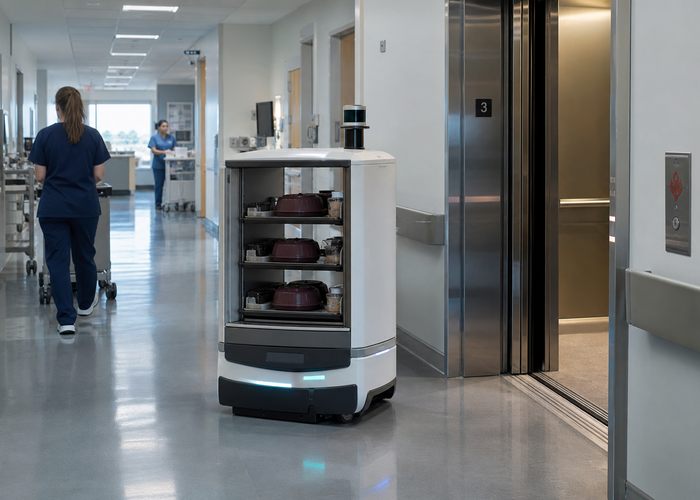
Why 3D LiDAR SLAM is the New Standard for Hospitality Robots

Service robots that can’t adapt to a crowded hotel lobby in real time aren’t autonomous — they’re expensive obstacles. This is why LiDAR SLAM service robots are rapidly replacing first-generation automated systems, and why 3D spatial mapping has become the defining capability separating functional hospitality robotics from truly intelligent ones. SLAM — Simultaneous Localization and […]

semantic segmentation LiDAR for 3D LiDAR sensor applications

Beyond 2D LiDAR: Advanced 3D Point Clouds for AMR Navigation

A single horizontal laser slice cannot protect an AMR from a world that extends in three dimensions — and in busy warehouses, that gap between what a sensor sees and what actually exists is where collisions happen. 2D LiDAR’s fundamental flaw is its physical blind spot: it scans one fixed plane, typically 15–30 cm above […]

2d vs 3d lidar for agv for 2D LiDAR sensor applications

2D vs. 3D LiDAR for AGVs: Boosting Warehouse ROI & Navigation

Warehouse automation has crossed a threshold where the sensor a robot uses isn’t a spec-sheet detail — it’s a strategic decision that shapes uptime, safety margins, and ultimately, return on investment. The 2D vs 3D LiDAR debate is now the defining technical choice for any warehouse operator scaling autonomous mobile robots. Early AGVs relied on […]

LiDAR cost projections 2026 for 3D LiDAR sensor applications

The 2026 Tipping Point: From Experimental R&D to Mass-Market ADAS

Automotive LiDAR is crossing a threshold that the industry has been building toward for nearly a decade — and 2026 is where the economics finally align with the engineering. For most of its commercial history, LiDAR sat behind a velvet rope: a premium sensor reserved for autonomous vehicle prototypes and six-figure luxury flagships. That’s changing […]

lidar navigation robotic vacuums household for robotics LiDAR sensor applications

Why LiDAR is Essential for Nighttime & Backlight Navigation

Cameras often struggle at night not solely due to software shortcomings, but because of an unavoidable physical dependency baked into every silicon sensor on the market. CMOS sensors — the image capture technology powering virtually every automotive camera today — are fundamentally passive devices. They collect ambient photons reflected off objects and convert that light […]

radar lidar fusion for 3D LiDAR sensor applications

The Physics of Redundancy: Why LiDAR Alone Fails in Edge Cases

LiDAR is not a universal solution — it’s a precision instrument with hard physical limits that make sole reliance on it a functional safety liability. LiDAR wavelengths, whether 905nm or 1550nm, scatter aggressively when photons collide with water droplets and ice crystals in fog, heavy rain, and snow. At these wavelengths, the beam return signal […]

coherent detection for 3D LiDAR sensor applications

FMCW vs. ToF LiDAR: The Key to Level 4 Autonomous Vehicles

Two fundamentally different physical principles separate legacy LiDAR from the next generation — and that gap now determines whether autonomous vehicles can safely navigate the real world. ToF operates like a stopwatch. The sensor fires a discrete laser pulse, then counts the nanoseconds until that pulse returns. As detailed in LidarStar’s detailed technical overview, ToF […]

flash lidar vs scanning lidar for flash LiDAR sensor applications

Solid-State vs. Mechanical LiDAR: The Future of L4 Autonomy

Mechanical LiDAR sensors are engineering marvels built for laboratories — but the demands of Level 4 autonomy are systematically exposing every fragility they carry. At the core of every spinning LiDAR unit sits a stack of high-speed rotating mirrors, motors, and precisely aligned optical assemblies cycling thousands of times per minute. Each revolution introduces micro-stress […]

IO Obstacle Avoidance LiDAR for 3D LiDAR sensor applications

The Perceptual Vacuum: Why Long-Range LiDAR Isn’t Enough

Most autonomous robots are built to see far — but the collisions happen close. That fundamental mismatch defines one of the most underappreciated risks in modern robotics, and it’s why 3D blind spot compensation LiDAR is rapidly shifting from optional upgrade to core safety requirement. Long-range LiDAR systems are architecturally optimized for the horizon, not […]

IO Obstacle Avoidance LiDAR for 3D LiDAR sensor applications

The Shift from Reactive to Predictive Obstacle Avoidance

Autonomous systems relying on reactive detection alone are already obsolete — the industry’s next competitive line is drawn between sensors that detect and systems that predict. LiDAR obstacle avoidance has crossed a threshold: stopping when something appears is no longer good enough.a Traditional sensing technologies carry well-documented constraints. Ultrasonic sensors saturate at close range and […]

Product Enquiry