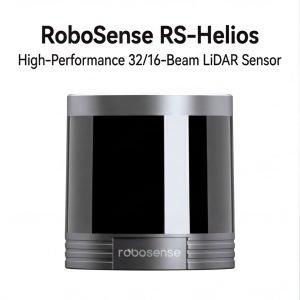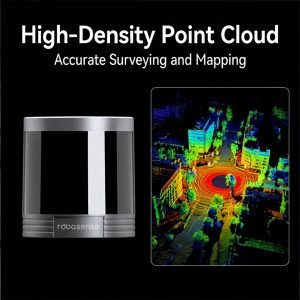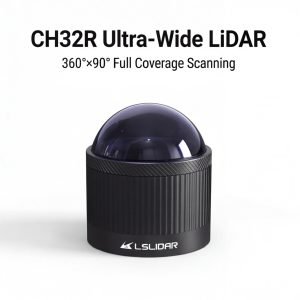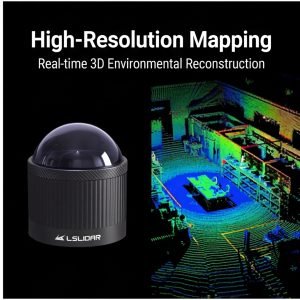
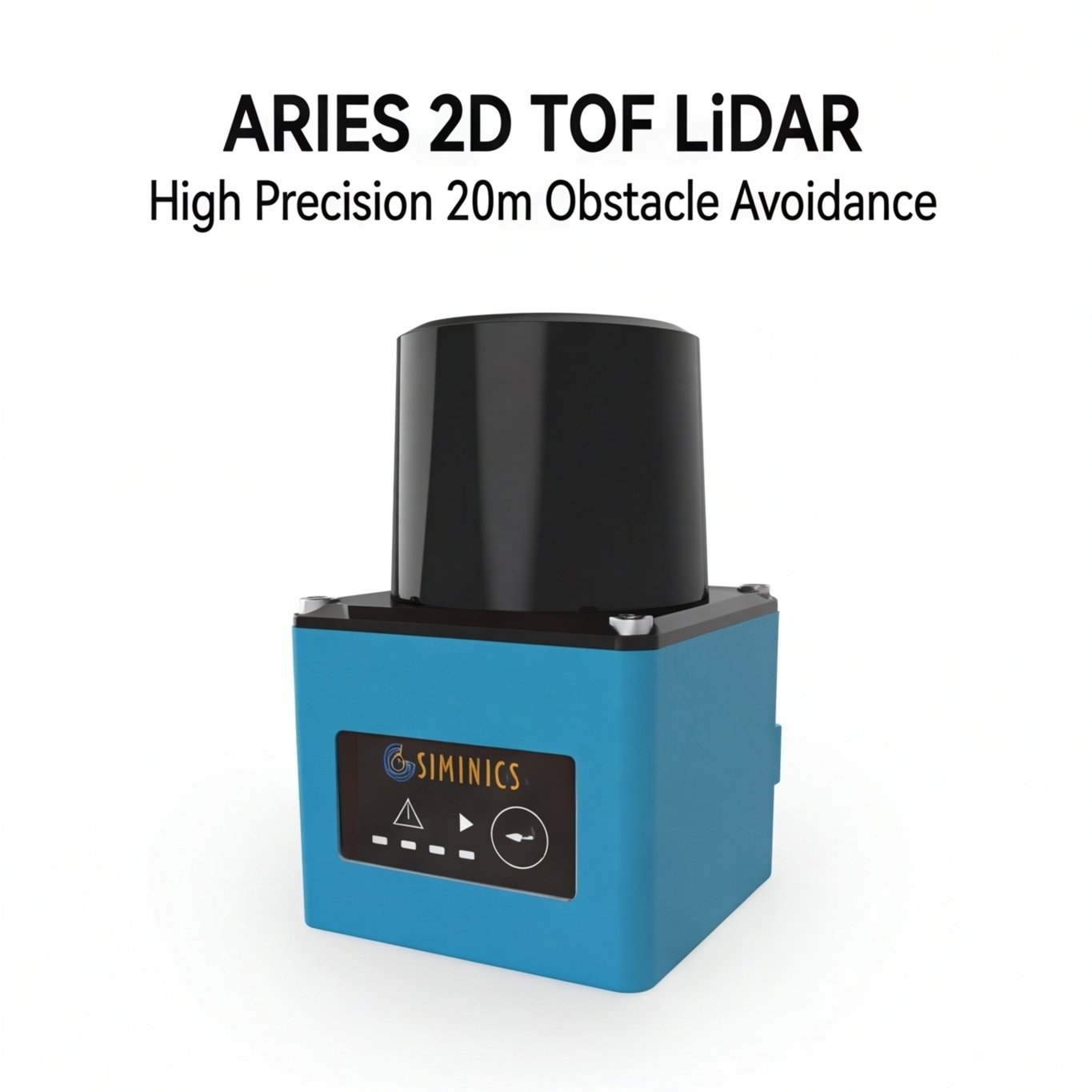
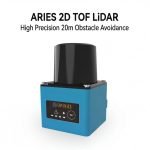





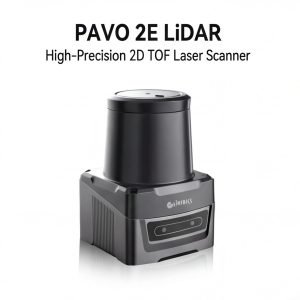

E2D TOF Obstacle Avoidance Laser Lidar ARIES
core functionality
- Obstacle detection: By emitting laser beams and receiving reflected signals, it scans and measures the distance to objects in the surrounding environment in real time.
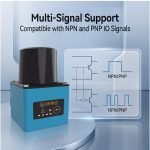
- Area monitoring: Multiple irregular warning areas (such as warning zones, deceleration zones, and stop zones) can be set up. When an object enters the preset area, the system will quickly output a signal.
- High accuracy and anti-interference: It typically features high measurement accuracy, strong resistance to ambient light interference, and stable operation under various indoor and outdoor lighting conditions.
Product Features
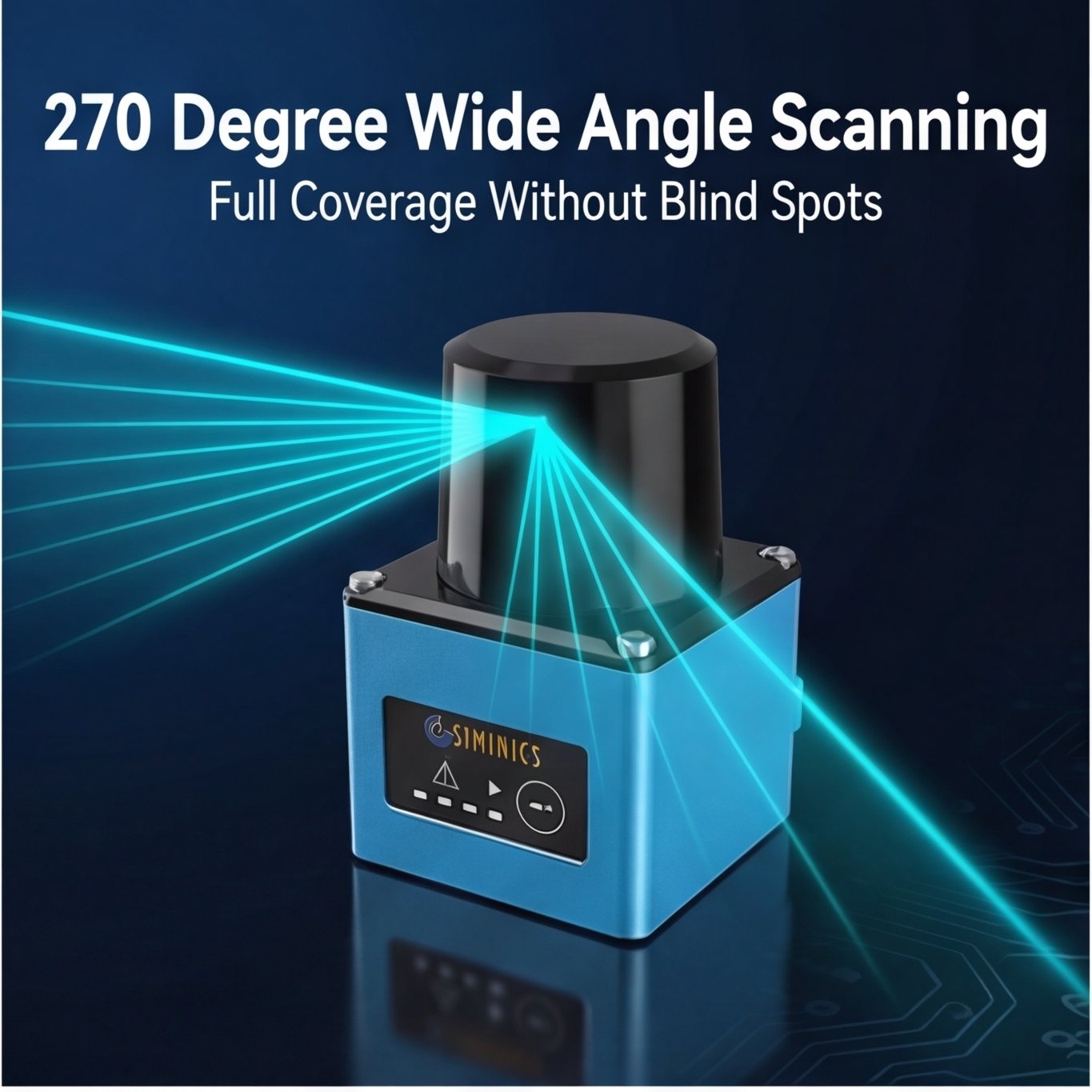
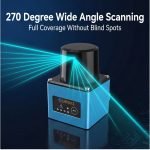
- measurement range :Distance of 5m + angle of 270°
- automatic learning:Learn from real-world scenarios and monitor contours
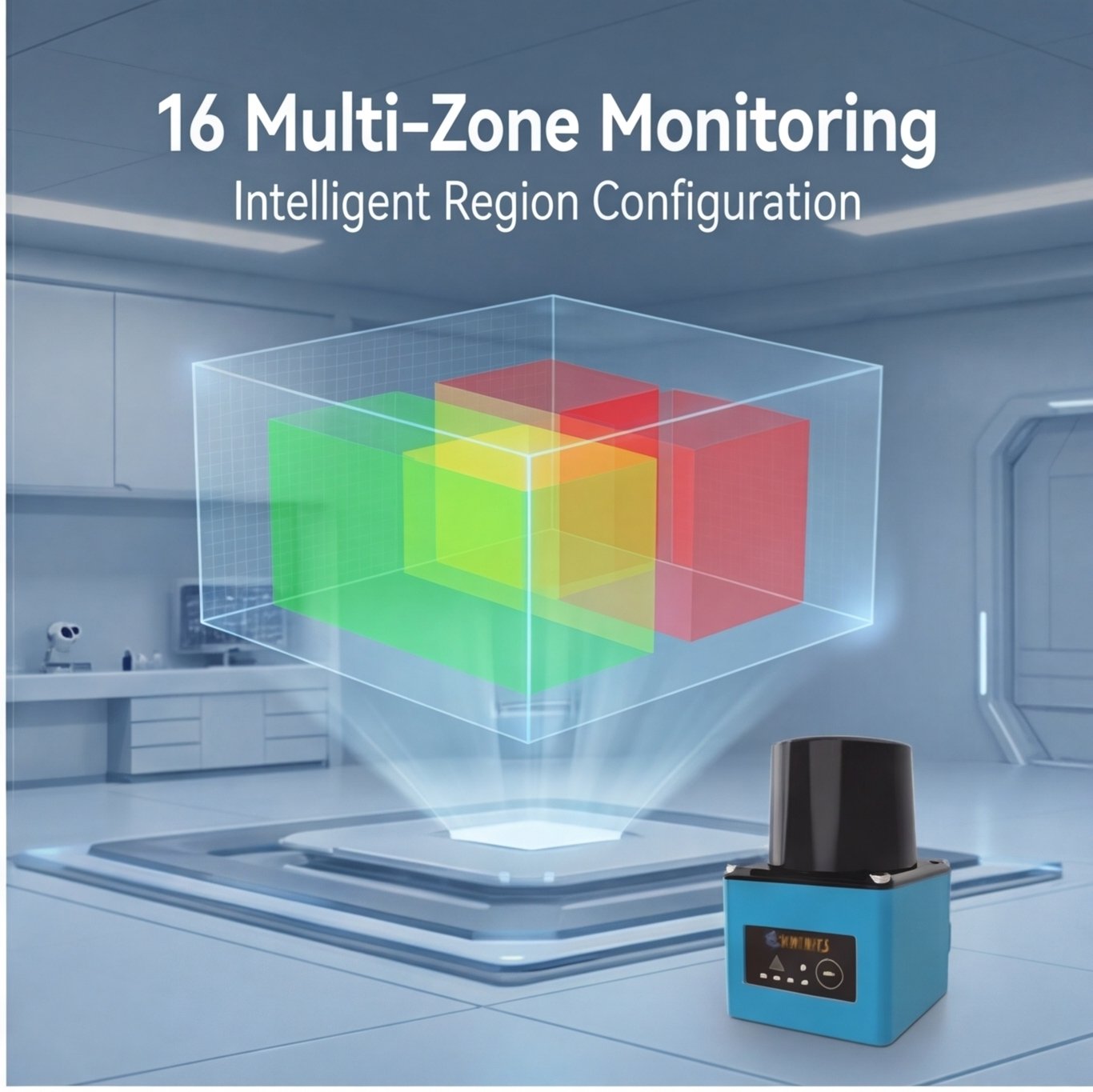
- Multi-zone monitoring:Independent setting of monitoring areas
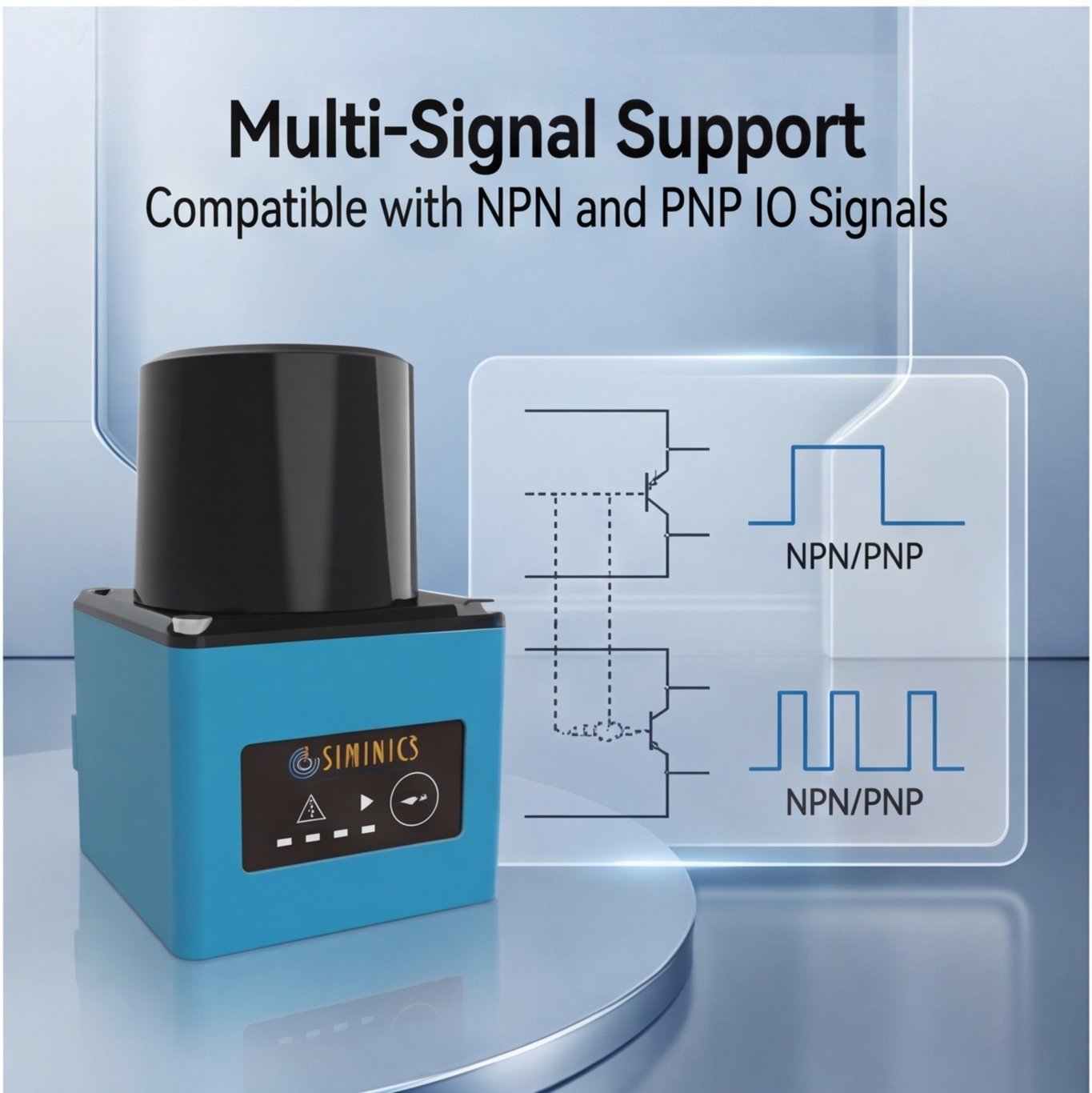
- External device driver:The switch provides a driving force of DC 30V 50mA
- Pause function, balance production:Built-in shutdown and restart functions. Compatible with production line relocation strategies
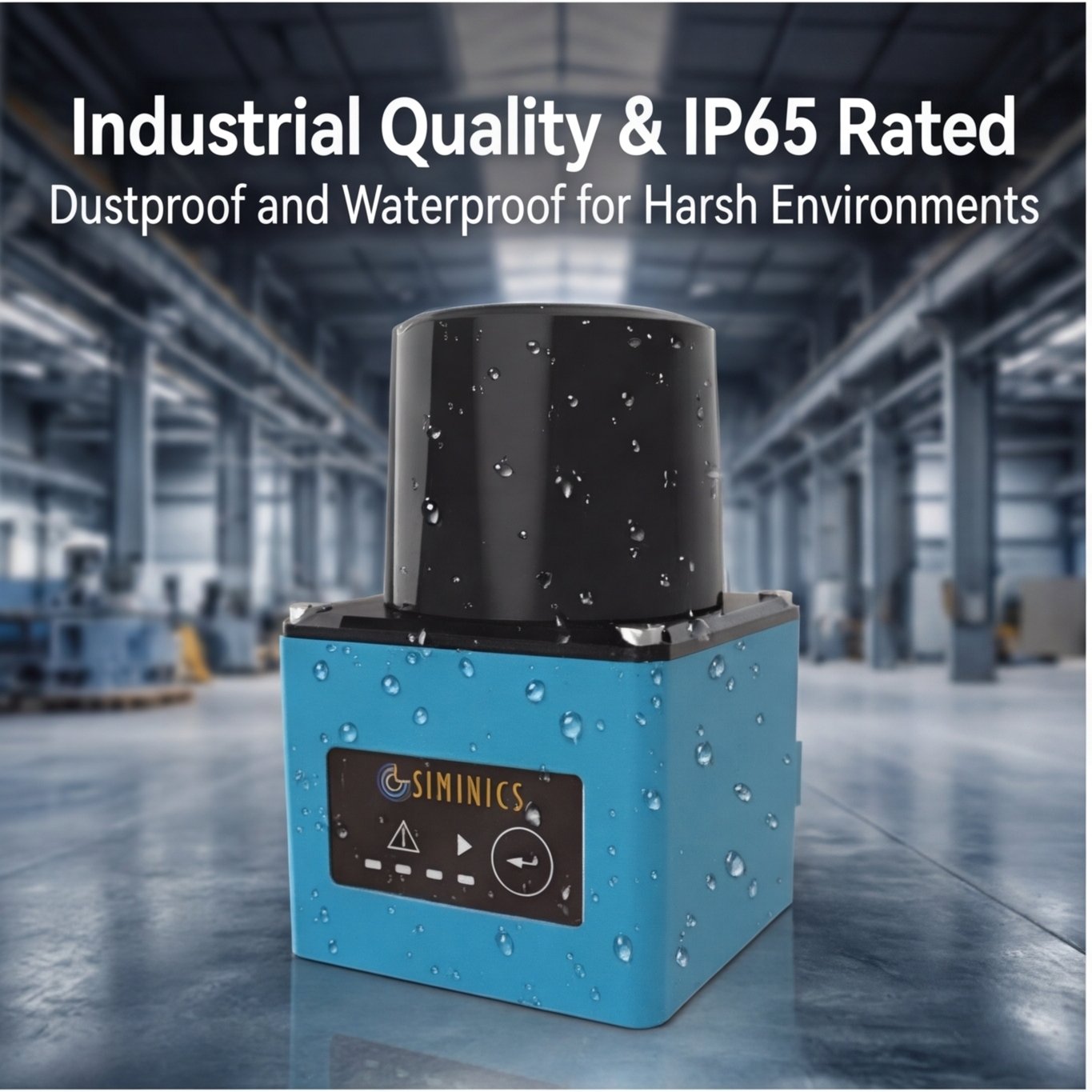
- IP65:It can still be used in harsh industrial environments with dust and water resistance
- 16 types of regional group settings :Quick configuration, fast loading
main purpose
- This type of obstacle-avoiding LiDAR is widely used in autonomous navigation and safety protection for various mobile robots and automation equipment. Typical scenarios include:
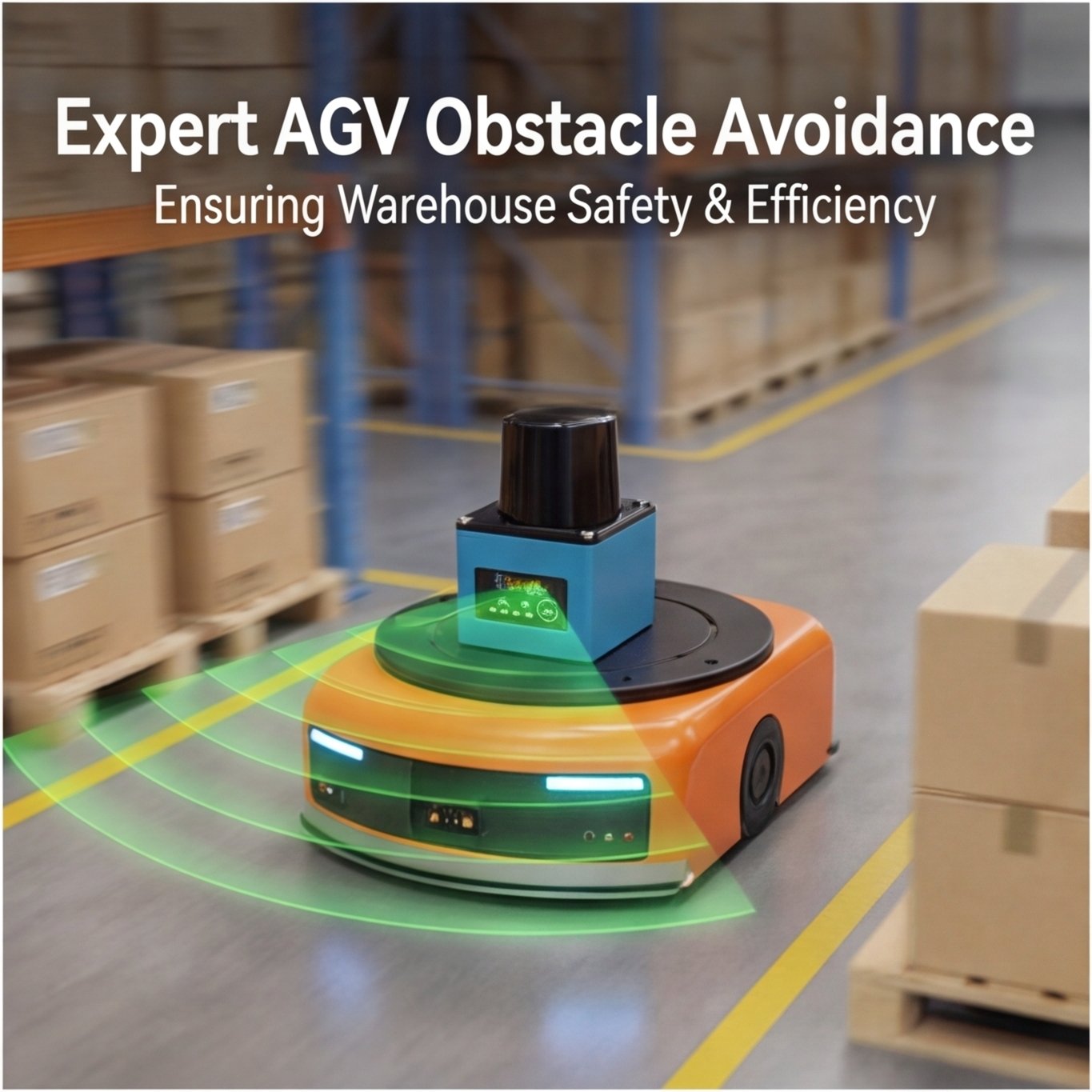
- Automated Guided Vehicles and Autonomous Mobile Robots: AGVs/AMRs used in warehouses and factories to achieve dynamic obstacle avoidance and emergency stopping on the path ahead.
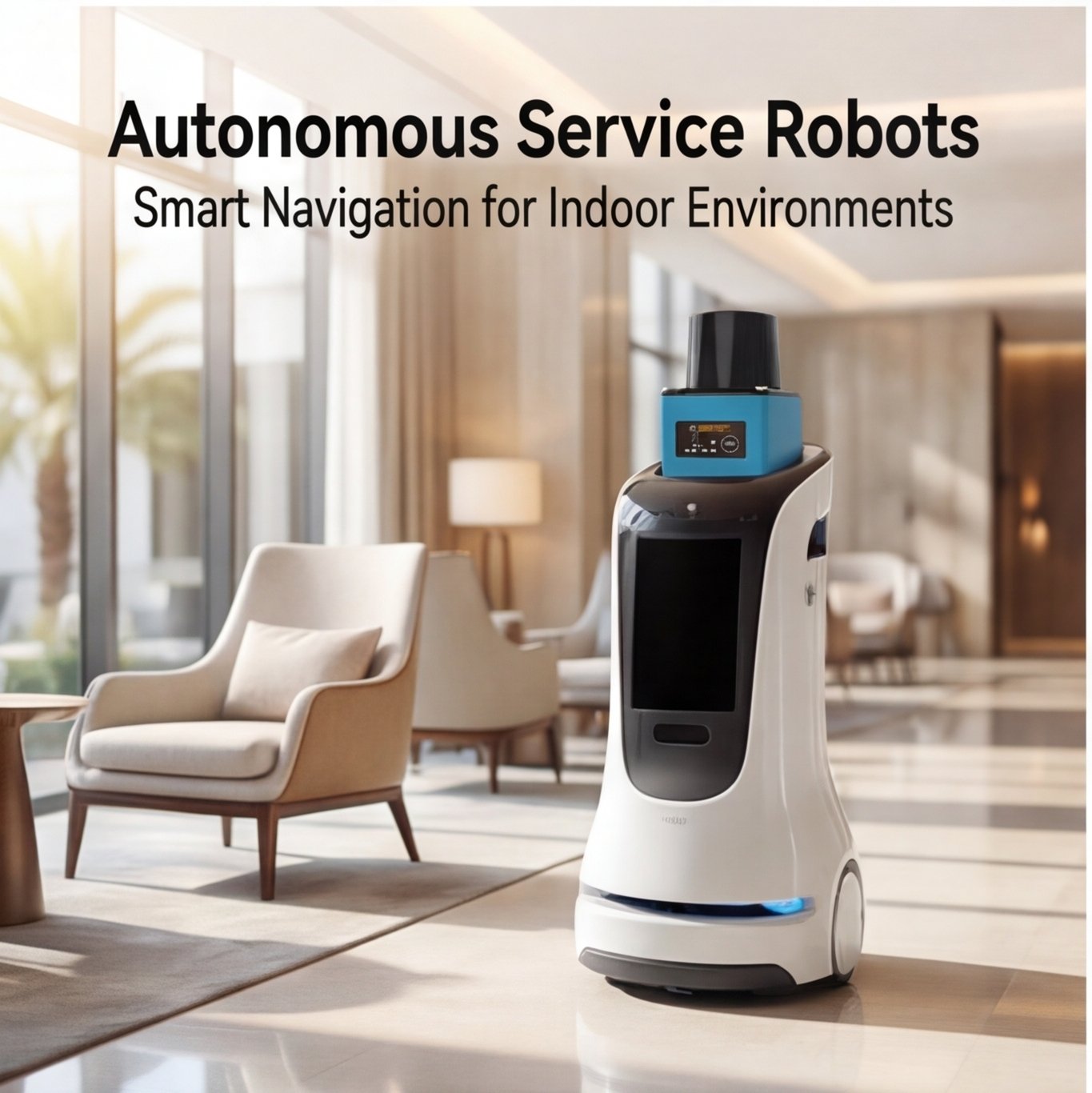
- Service robots: Robots used in commercial cleaning, hotel delivery, security patrol, and other applications, ensuring their safe operation in crowded or complex environments.
- Industrial automation: used for area protection and collision warning of large mechanical equipment such as stackers and cranes.
- Smart transportation: applied to scenarios such as anti-smashing of barrier gates and safety inspection of rail transit platforms.
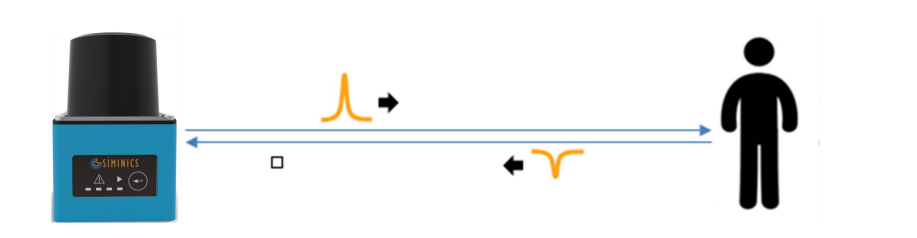
Aries is a Time-of-Flight (TOF) radar, with its core components encompassing optics, mechanics, circuitry, and software. During operation, the laser emitter emits a beam of laser light, which reflects off an object when it encounters it. The receiver detects the reflected light signal, and then the time analysis module measures the time difference between the reflected light and the emitted light. By multiplying the time by the speed of light, the distance traveled by the light is obtained, and thus the position of the object can be inferred, as illustrated in the figure:
The principle of object size calculation is illustrated in the figure below:
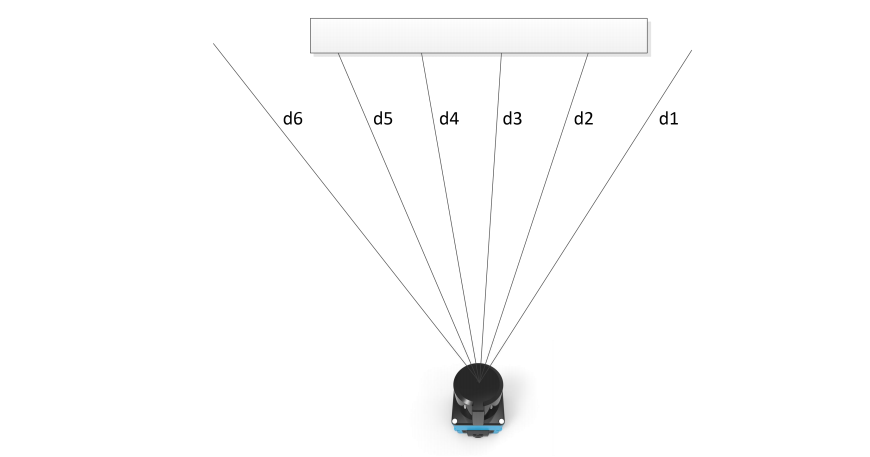
d1, d2, … d6: represent the distances between the object and the lidar, and the angular difference between them is the angular resolution of Aries.
The formula for calculating the size of an object is:
W = d2 + d3 + d4 + d5 ∗ (2π/360) *angular resolution
Among them: Angular resolution is related to rotational speed and is set by the customer through AriesView.
In coordination with the user-predefined alarm zone, the lidar detects any intrusion of objects into the alarm zone and immediately outputs an alarm signal. The system utilizing the lidar processes this signal, thereby achieving the objective of obstacle avoidance.